Red Sea Legal Letter * Issue 3
A Squeeze In Aden + Added War Risk
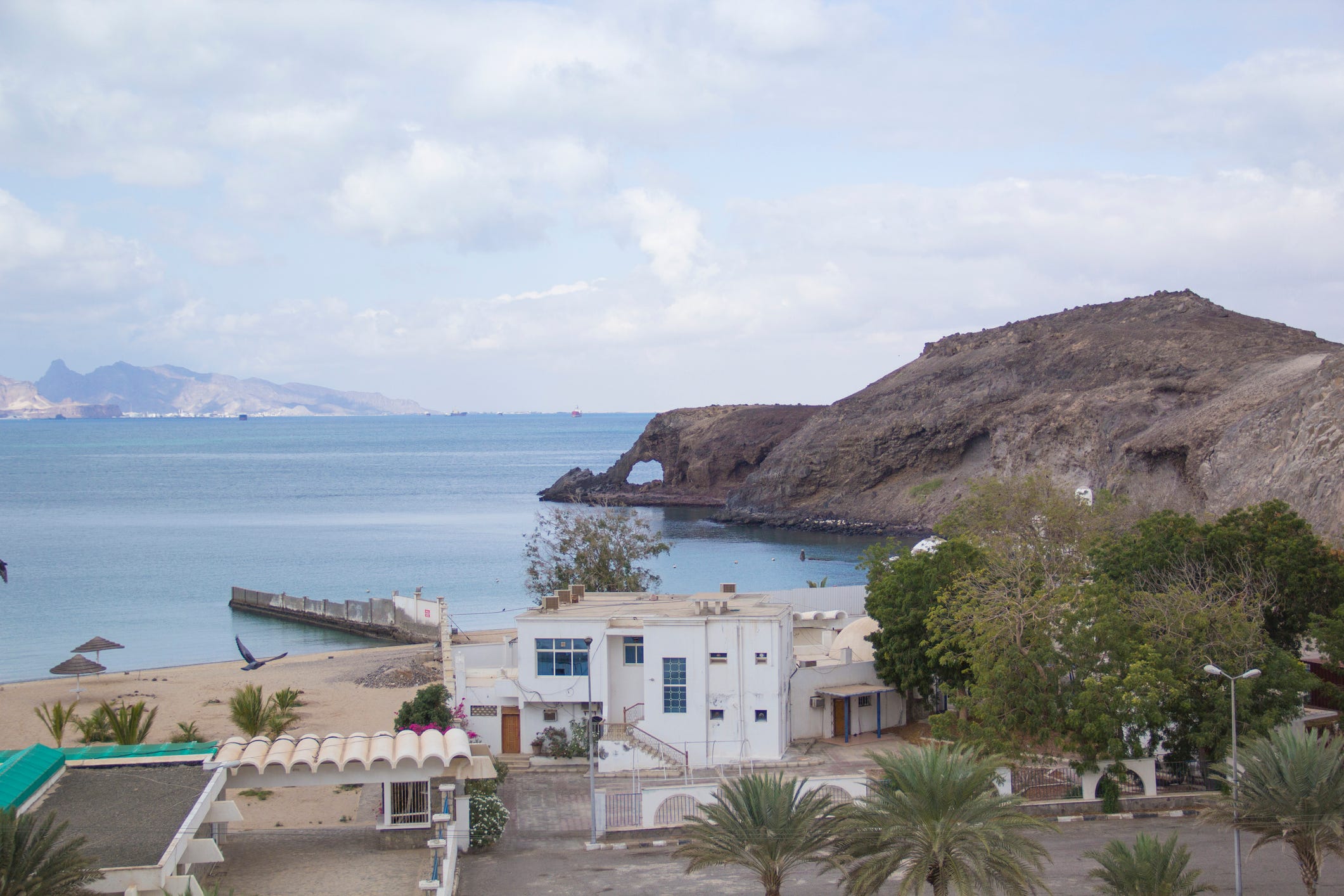
Elephant Bay, Al Tawahi, Aden
Legal trends and precedents related to the Red Sea Basin. See our interactive map for events cited in this issue. Revised and current through 11 July 2026.
Summary:
The week’s covered legal developments for the Red Sea basin are heavily weighted to Yemen and the Yemeni coast. Saudi Arabia and Yemen’s recognized government are working to dismantle the UAE-backed Southern Transitional Council (STC) through an asset freeze in Aden and a UN-listing request against its leader, turning a political power struggle into a compliance question for any bank holding the council’s accounts.
Simultaneously, “small-boat attacks” off Hodeidah and Balhaf have heightened war risk and charter-party exposure to Red Sea and Gulf of Aden shipping, adding another layer on top of the Houthi’s ongoing threat against Israel-linked vessels. President Trump’s July 8 declaration that the interim ceasefire is now “over” has led any holdout underwriters and the major container lines to suspend Gulf and Red Sea transits and reroute around the Cape of Good Hope. And not least, Washington has restored sanctions on Iranian oil.
The Southern Transitional Council Listing
The week’s principal sanctions action on Yemen’s coast targeted the Southern Transitional Council (STC), the Emirati-backed faction that Yemen’s leadership “formally” dissolved in January. The Aden attorney general’s freeze treats the council’s funds as misappropriated state property, while Yemen’s recognized government has asked the UN to add the council’s leader, Aidarous al-Zubaidi, to its Yemen sanctions list. The freeze already creates a compliance question for any bank or exchange house holding council-linked accounts. A UN listing would extend that exposure across the membership the moment it was made.
A sanctions listing against al-Zubaidi is far from assured. Designation requires consensus among all fifteen Security Council members; the routine renewal of the Yemen sanctions regime in November 2025 passed only with Chinese and Russian abstentions, and al-Zubaidi and his aides have so far escaped formal designation despite earlier requests. The council has threatened to escalate.
The Southern Transitional Council is more than a political party. It is a secessionist movement in southern Yemen with its own armed forces, which in late 2025 seized the Hadramout and al-Mahra governorates before Yemen’s internationally recognized government dissolved it in January 2026. Its threat to escalate is a threat to push the standoff out of the legal and financial arena and into the physical one: renewed armed confrontation with Saudi-backed government forces in the south, street protests in Aden, and a refusal to accept its dissolution or Riyadh’s authority.
On whether a listing would actually remove al-Zubaidi, Michael Brill drew an analogy to the January 8, 2021 US Treasury Department designation of Falih al-Fayyadh, chairman of Iraq’s Popular Mobilization Forces (the PMF, or Hashd al-Shaabi) — the state umbrella body over the country’s mostly Shia, largely Iran-aligned paramilitaries.
After Prime Minister Adil Abdul-Mahdi resigned in 2019, al-Fayyadh was floated as a candidate to succeed him. The US Treasury designated him under the Global Magnitsky human-rights sanctions program (Executive Order 13818), tying him to the lethal crackdown on Iraq’s 2019 “Tishreen” protests, in which security forces and militias killed hundreds of demonstrators. The al-Fayyadh designation “ended his aspirations of becoming prime minister” but left his militia and parliamentary bases intact. Brill judged al-Zubaidi “a much weaker political figure than al-Fayyadh,” which makes the UAE the deciding factor: “If that support isn’t forthcoming, UN sanctioning could effectively finish him off politically. Even if the UAE does back him, the sanctioning may still weaken him” over time. The compliance exposure for banks is immediate; the political effect depends on Abu Dhabi.
The Houthi Ban and War Risk on Red Sea Shipping
The Houthi “complete and total ban” on Israeli-linked shipping, declared 8 June, held through the week. Its legal effect comes from its reach: underwriters’ guidance defines “Israeli-linked” to include current or former Israeli ownership and companies that call at Israeli ports, which draws in flag-of-convenience and formerly Israeli-owned ships whose charter parties may never have allocated the risk. A declared total ban is the event underwriters use to widen war-risk exclusions and to trigger the deviation and liberty clauses that let a master divert from a dangerous port.
This week’s small-boat attacks off Hodeidah and Balhaf [see map] keep the exposure high. and add a question of attribution, as the identity of the attackers is still unverified. A Houthi-linked attack and an opportunistic boarding carry different coverage and liability consequences, and the record of which one occurred will matter to any later claim.
***
The Gulf’s troubles continue to weigh upon the Red Sea. With the Strait of Hormuz effectively closed after the ceasefire’s collapse, war underwriters have advised owners to pause Gulf voyages and have reviewed their terms for the Red Sea and its southern strait, Bab al-Mandeb. Maersk, CMA CGM, and Hapag-Lloyd have all suspended transits through both the strait and the Red Sea, rerouting around the Cape of Good Hope, adding ten to fourteen days to voyage times.
For Red Sea–exposed charters the question in dispute is who bears that cost — the deviation and delay the longer passage imposes, which charter parties allocate between owner and charterer.
The war-zone transit question now reaches the crew as well as the charter. On 10 July Thailand’s Labour Court accepted a damages claim by three surviving crew of the Thai-flagged Mayuree Naree, struck by two projectiles in the Strait of Hormuz on 11 March, in which three seafarers died [see map]. The survivors, all diagnosed with post-traumatic stress disorder, argue that Precious Shipping and the master breached a duty of care by sending the ship through the strait during active hostilities; the company says it met its obligations. It is the first crew-against-employer test of that duty from the 2026 conflict, and the same question hangs over any order to send a crew through Houthi-threatened Red Sea waters.
Restored Iran Sanctions and Red Sea–Exposed Finance
The collapse of the Hormuz reopening reached Red Sea–exposed finance through sanctions. On 7 July, after Iran’s Revolutionary Guards struck three vessels in the strait [see map] and the ceasefire broke down, the US Treasury’s Office of Foreign Assets Control (OFAC), the sanctions regulator, revoked General License X — the 60-day authorization of most Iranian oil dealings it had issued on 22 June — and replaced it with the narrower General License X1.
The new license permits no new Iranian oil sales after 7 July and allows a wind-down only to 17 July, with the proceeds held in a blocked, interest-bearing account. The underlying designations are back in force, and European Union and United Kingdom measures never lifted. A Red Sea–exposed trader, bank, or shipper that had relied on the June authorization must now wind down by 17 July or freeze the proceeds.
The reopening memorandum has also left a coastal-state fee claim for the strait unresolved: the law of transit passage does not permit a coastal state to charge ships merely for passing through an international strait. With the deal declared “over,” that question is currently academic. Dr. Birol Baskan liked Pakistan’s failed mediation as to the absence of US pressure guarantees. On that reading, a durable replacement for General License X1 before the 17 July wind-down is improbable, and the Iranian oil designations will stand.
Qatari LNG and the Suez Route
Qatari LNG bound for Europe normally transits the Red Sea by way of Bab al-Mandeb and the Suez Canal, which ties QatarEnergy’s contract position to this basin. The reopening had been expected to weaken the company’s force-majeure claim on deferred cargoes by removing the strait closure it relied on; the renewed closure has strengthened it. After Iran struck the Qatari carrier Al Rekayat on 7 July — and an early-warning site in Qatar itself on 9 July — QatarEnergy paused its plan to raise output at Ras Laffan and cut vessel calls, and the force majeure it first declared in March, after Iranian strikes damaged two LNG trains there, now runs to early September. It covers 21 cargoes owed to Italy’s Edison under a 25-year contract, about 2.7 billion cubic meters of gas, of which Edison has replaced fourteen at its own cost; India’s state importer Petronet, another Ras Laffan buyer, has in turn declared force majeure to its own domestic customers.
Ambassador Patrick Theros notes the active constraint for Qatari production is the physical damage sustained by earlier Iranian attacks on Ras Laffan, the world’s largest Liquefied Natural Gas hub. With affected trains offline for years, QatarEnergy must decide “how to allocate available LNG — commercially it makes sense to restore deliveries first to its most valuable long-term customers while protecting itself legally from claims by those whose cargoes remain deferred.” Lifting force majeure one customer at a time is the likely commercial path; it leaves the legal exposure open, and the Red Sea route those cargoes would take is, for now, one owners are avoiding. Most Gulf LNG contracts run under English or New York law, where force-majeure relief depends on the claimed event being the actual cause of non-performance and on the seller having taken reasonable steps to limit the harm — a notice grounded in the physical damage at Ras Laffan is easier to sustain than one resting on the strait’s status.
Things to Watch For Over the Next Weeks
● Whether the UN lists al-Zubaidi, creating secondary exposure for banks with council-linked accounts — with the political effect depending, as Brill argues, on continued UAE backing.
● Whether a confirmed attack on a non-Israeli ship off Yemen tests the ownership-based definition underwriters now apply to the Houthi ban.
● Whether the Thai Labour Court’s handling of the Mayuree Naree claim sets a duty-of-care precedent for ordering crews through war-zone waters, the Red Sea included.
● Whether the Red Sea and Bab al-Mandeb war-risk repricing hardens into declared force-majeure and blocked-passage claims across affected charters, now that underwriters have advised owners to pause and the lines have rerouted to the Cape.
● Whether OFAC issues a durable instrument before the 17 July wind-down under General License X1, or the Iranian oil designations return in full.
● Whether the Edison or Petronet force-majeure notices move to arbitration, or QatarEnergy lifts force majeure one customer at a time — the sign Ambassador Theros points to.
● Whether Qatar’s “fully legally responsible” statement over the Al Rekayat is followed by a formal claim against Iran.
Further reading from our network. No Red Sea Futures principal published a new piece in the last ten days on this week’s legal stories. The work behind Michael Brill’s reading of the al-Zubaidi listing bid is his own study of the Treasury’s Iraq designation, “Falih al-Fayyadh’s Fall From Grace” (Hoover Institution, 2021), on how a sanction used inside a coalition reshapes a target’s politics without removing him.
Red Sea Futures Contributors to this issue
Birol Baskan — Political scientist specialising in Middle East and Turkish foreign policy and Gulf geopolitics. A former professor at Georgetown University in Qatar and non-resident scholar at the Middle East Institute, he writes widely on regional powers and mediation. He is the author of books on Turkey, Iran, and religion-state relations, and works as an independent scholar based in Ankara.
Michael Brill — Middle East political analyst and Ph.D. candidate in Near Eastern Studies at Princeton, where his dissertation examines Baʿth Party founder Michel ʿAflaq. Visiting Scholar at Smith College; 2024–25 Wilson Center Global Fellow and Air Force Academy Non-Resident Fellow. M.A., Georgetown. Published in Foreign Affairs and War on the Rocks.
Roy Facey — Master mariner and maritime consultant with decades at sea and ashore in tanker operations and shipmaster training, including work with Kuwait Oil Tanker Company crews. He advises on navigation risk, safe transit, and crew safety in the Gulf and Red Sea, and contributes practitioner assessments drawn from a working network of serving and retired ship captains.
Patrick Theros — US Ambassador to Qatar (1995–1998) and a career Foreign Service officer for 36 years, with senior postings in Abu Dhabi, Amman, and Damascus and as political adviser to Central Command. Now a strategic adviser at the Gulf International Forum in Washington, he writes and consults on Gulf security, energy, and US–Gulf relations, drawing on long-standing ties in Doha.
The Red Sea Legal Letter is part of the larger weekly “Red Sea Brief,” a summary of which is posted for free on Substack. If you’d like to receive the Red Sea Legal Letter, it is available after July 30, bimonthly, with a paid subscription. To learn more about Red Sea Futures and our Red Sea consulting and intelligence products, visit us on www.redseafutures.com
Get the next issue by email.
Read/Subscribe on Substack →