Iran's Not-So-Phantom Tollbooth
Treating It As Real Will Make Matters Worse
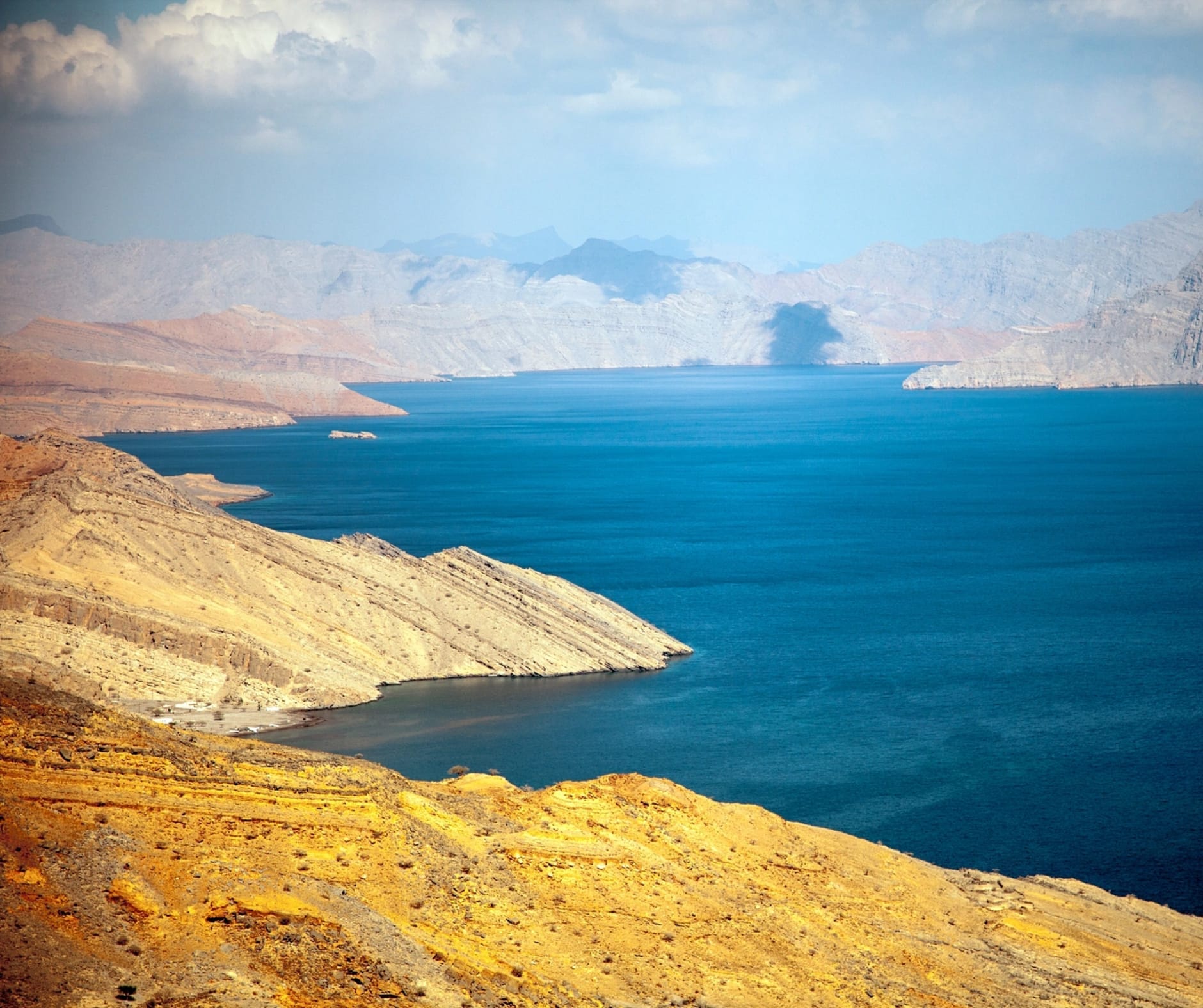
Khor Najd, Oman
By Danial Kaysi
Since early March 2026, Iran has been operating what amounts to a political toll booth at the entrance to the world’s most important energy corridor. It has selectively allowed ships through the Strait of Hormuz, based on bilateral agreements and unilateral designations allowing specific countries’ ships to transit upon paying millions in fees and being screened and escorted by the Islamic Revolutionary Guard Corps (IRGC). The IEA calls this “the largest supply disruption in the history of the global oil market” and Iran appears to want the arrangement to continue in force beyond the end of the war.
Iran’s fifth of fifteen current conditions for ending the war is both unprecedented and audacious: international recognition of its sovereignty over the Strait of Hormuz. Such a demand hasn’t appeared in any prior negotiation in modern history. Nevertheless, Iran’s condition is strategic and consistent with its wartime posture: enforcement of a de facto state of control along with what amounts to a working toll system. Disruptive, but not shocking. A demand that sovereignty over the Strait be recognized even in peacetime is something else: an attempt at a more permanent departure from international norms and legal mechanisms.
Most commentary has focused on whether Iran’s demand is legal. It isn’t. Transit passage through international straits cannot be suspended under either the UN Convention on the Law of the Sea (UNCLOS) or customary law. Even in places where straits pass within the territory of a single state (Turkey’s Bosphorus, Egypt’s Suez, the Panama Canal), tolling is nondiscriminatory or nonexistent, and free passage of civilian vessels is protected, regardless of political alignment. Iran’s demand is not geographically consistent either. The Strait’s internationally recognized shipping lanes do not pass through Iranian waters. Rather, they pass through Oman’s, where Iran has no jurisdiction to charge a toll or determine what ships should be allowed to pass.
Iran’s demand for post-war sovereignty over the Hormuz Strait may well be maximalist by design: a negotiating position calibrated for a counterpart who treats legal frameworks as tradable. But, increasingly so, Iran has increasingly worked to create facts on the ground that will be difficult to reverse if they are treated as acceptable, negotiable objectives. Iran has agreed on passage terms with nearly a dozen countries, early adopters of a system that Iran may not intend to end as part of a ceasefire. Further signaling intent, on March 31, an Iranian parliamentary commission approved a draft set of regulations to govern the Strait, including transit fees and outright restrictions on vessels “linked to” specific countries. Iran and Oman, the international transit passage’s riparians, are also reportedly co-drafting a bilateral monitoring protocol over Hormuz transit.
With each passing day that Iran can extract concessions and favorable terms from countries concerned about the short-term wartime safety of their vessels and international passage rights, Iran’s military enforcement is transformed into a long-term reality and governance framework. Among the most important postures on the status of the Hormuz, however, is that of Iran’s key opponent and negotiation counterpart, the United States.
In its growing search for a palatable deal, the United States has itself played a role in making Iran’s demand more achievable. Although the US has traditionally positioned itself as the world’s foremost defender of freedom of navigation and transit, President Donald Trump has addressed the issue in ways that suggest the Strait’s status is negotiable. He, at times, dismissed the Strait’s closure as “a problem for other countries to resolve,” stated that “Iran doesn’t have to make a deal,” and publicly floated different ideas on what the future of the Strait may look like, saying it may be controlled by the US ( saying it may be called the “Strait of Trump”), or jointly with the Ayatollah. Trump’s messaging here is likely aimed at his own GCC and European allies, but his statements nevertheless simultaneously send at least three distinct signals. The Iranians read confirmation that he may be willing to engage on the issue of post-war control of the Strait. Allies absorb the pressure, as intended. And states with contested maritime claims, both in the region and beyond, see that the United States, long regarded as the guarantor of freedom of navigation, may now appear ambivalent about defending it.
The threat to the Strait is now bifurcated. A deal that accepts Iran’s demand legitimizes it. A US exit that leaves Iranian de facto control unaddressed does the same.
Both paths validate Iran’s contestation of a widely accepted legal norm and undermine trust in security norms whereby the US provides a security umbrella in the region and ensures free passage in international waters. Engaging with the status of the Strait of Hormuz as a question rather than a matter of fact also resurfaces the globally settled questions of what international waters mean and whether the UN Convention of the Law of the Sea (UNCLOS), signed by 170 countries, holds when military force attempts to say otherwise. The International Court of Justice (ICJ) established passage rights for international states in 1949 under the Corfu Channel judgement. In 1982, UNCLOS was met with significant global support, in part to ensure that international waters and important chokepoints are protected from unilateral control, and that all countries have equal rights. While the US has not ratified the law itself, it has widely backed its application across the world. More importantly, the law has created stability and predictability on matters of maritime sovereignty, with legal disputes settled through bilateral negotiations (even by states like Lebanon and Israel) or in court, with court rulings generally respected across all disputes. Today, Iran is testing whether this still holds.
The key danger in perceived American ambivalence is that it allows Iran’s framing to survive regardless of how the war ends. Iran will have compromised the principle that military facts cannot be converted into legal rights over international straits. In fact, the last time the world was placed in such a position – whereby a state actor demanded payment for safe passage, discriminated by origin, and threatened violence for non-compliance – was in the early 1800s, and the US fought its first two international wars to establish the very rights that are now being flouted. The Barbary States’ actions had not amounted to piracy in a legal sense (the legal definition of the term doesn’t include state actors), but they were practically indistinguishable from it. Just as, today, Iran’s toll wouldn’t survive without Chinese acceptance, the Barbary system did not survive on its own. Britain and other European powers themselves paid tribute and actively encouraged the Barbary States to target the United States and other competitors’ ships, driven by commercial and strategic considerations following US independence. The tribute system existed and survived in large part because the Europeans found it politically expedient to pay tribute as a tradeoff for weakening their opponents and limiting their access to the Mediterranean.
As Iran’s most powerful friend, China purchases roughly 90% of Iranian oil exports and provides diplomatic cover. While China almost certainly pays preferential rates or none at all, Iran’s toll system is paid in yuan, advancing Chinese de-dollarization interests directly. And every day the US’ willingness to enforce freedom-of-seas is seen to be questionable as one where China’s position in the South China Sea becomes easier to hold. While China ratified UNCLOS in 1996, it has notoriously been among few states to openly discredit the 2016 South China Sea maritime rulings that did not come out in its favor. What happens in the Strait of Hormuz sets a precedent that China has been trying to establish in the South China Sea for many years. The principle’s erosion is what truly matters to China on this matter.
Even closer, and perhaps just as disruptive for global trade, Yemen’s Houthis are also watching. The IRGC-supported group has attempted (and some would say succeeded) in running a functionally similar system since 2023 at Bab el-Mandeb, discriminating against vessels and carriers based on political factors. The ultimate post-war status of the Hormuz will inform whether Sana’a’s non-state tactic could be formalized. Iran’s neighbors and their trade partners across South Asia, East Asia, and Europe have every long-term incentive to push back - despite short-term incentives encouraging compliance.
The US, European allies, and GCC states whose economies depend on Hormuz transit must treat the status of the Strait as non-negotiable. Even a perception that Iran’s demand is being considered by its negotiating counterparts is detrimental – it indicates that such a demand may be acceptable to the United States. And if it’s acceptable to the United States, it indicates that force can lead to change in status and control, regardless of law. If the law is bypassed anywhere, it’s undermined everywhere.
Danial Kaysi is a Senior Consulting Advisor at Red Sea Futures. Formerly at the Carnegie Endowment for International Peace in Washington DC, he has also advised the G20 Secretariat, USAID, FCDO, Global Affairs Canada, the World Bank, and others.
Subscribe to the Red Sea weekly Intelligence Brief, or upgrade to include our 30-page monthly risk report. Custom reports available, info@redseafutures.com. For our consulting offerings, visit us at www.redseafutures.com
Get the next issue by email.
Read/Subscribe on Substack →