Iran’s Uprising and the Red Sea: When Domestic Instability Becomes a Maritime Shockwave
Middle East security analyst Dr. Cyril Widdershoven explains how Iran's internal chaos could turn the world's most fragile shipping lane into a permanent crisis zone.
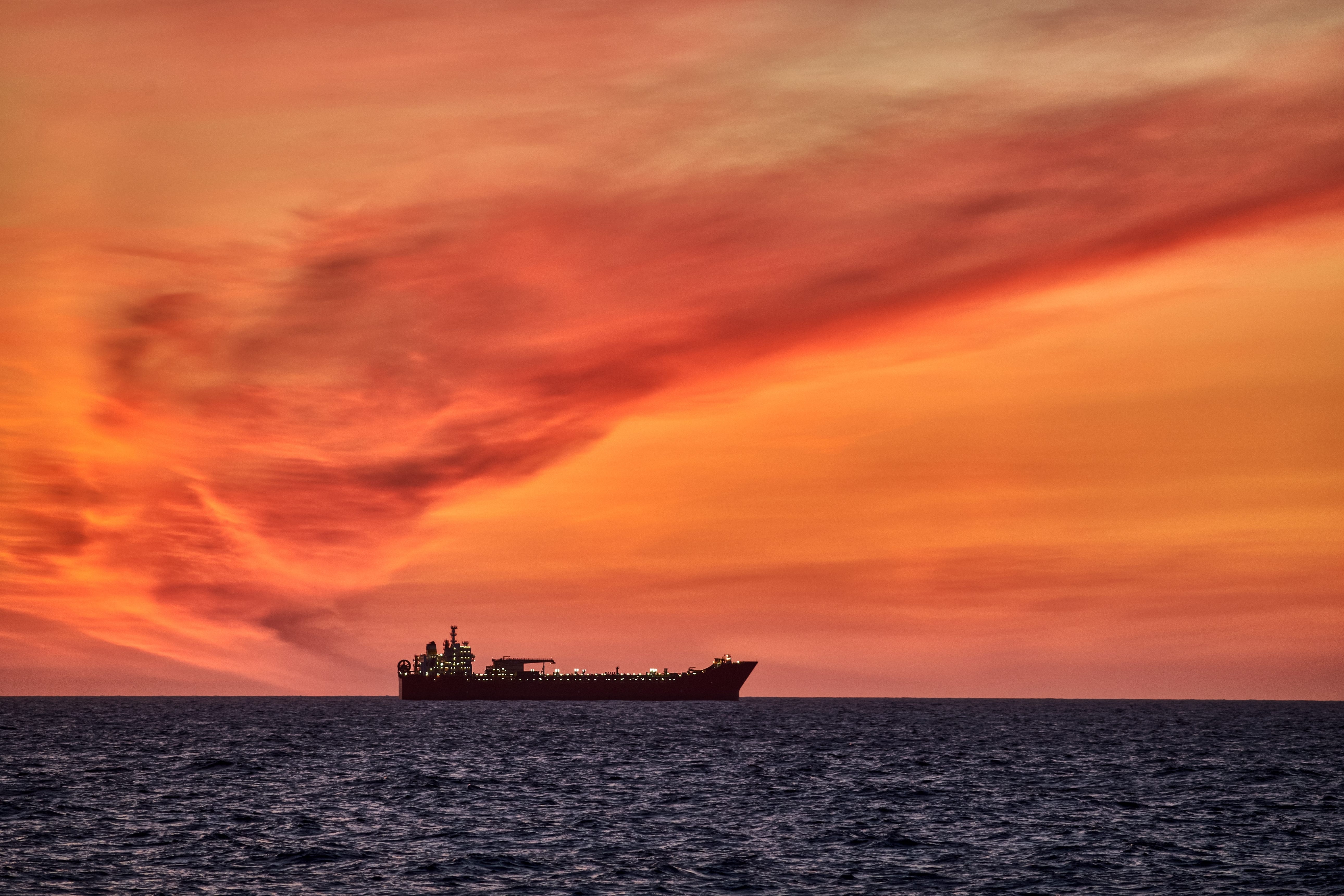
While Iran’s internal unrest, or potential regime change, is still analyzed through the familiar lenses of regime durability, sanctions pressure, and oil supply risk, the fallout of the current events is largely under-assessed—the current framing underestimates where the real impact of Iranian instability could be felt very soon. One of the most immediate spillover effects will not be in barrels lost, but in the shipping and maritime domain. The primary focus should be on the Red Sea and the Bab El-Mandeb at present. It could even have significant spillover effects, linking the Persian/Arabian Gulf to the Mediterranean arena. Iran’s turbulence is not a distant political drama for shipping, ports, and investors. It could be a multiplier of already fragile maritime risk, taking its toll straightaway, which should prompt stakeholders to remain vigilant and prepared.
This Substack is reader-supported. To receive new posts and support my work, consider becoming a free or paid subscriber.
During 2024-2025, the Red Sea crisis has already demonstrated a structural shift that markets are digesting. Iran’s proxy, Yemen’s Houthis, have been able to transform a regional conflict into a systemic one that still challenges global trade. The situation has also shown that asymmetric actors, backed by state sponsors, can impose costs historically reserved for major naval powers. When looking at this now, the current Iranian developments and the apparent regime instability have increased the probability that this model will intensify, not be contained, as some expect. Recognizing these dynamics can help stakeholders feel a sense of responsibility to support mitigation efforts and regional stability.
Taking the Tehrani view, any proxy leverage at sea can be seen as one of the few strategic tools that scales cheaply while still maintaining deniability. Iranian power players, faced with eroding internal legitimacy and increased fiscal pressure, could have an incentive to externalize risk. The Iranian Mullah regime is no stranger to maritime disruption tactics. The option of externalizing risks is clearly available when using maritime disruption. The latter offers not only high visibility but also deniability and has global economic resonance. Central decision-making in Tehran is not needed, as a weakening center could open the gates of hell, as it increases the autonomy of proxies and semi-state actors. Global actors and operators should assess the increased likelihood of miscalculation in the Red Sea corridor.
Current developments and threats to shipping will not primarily focus on a binary closure of the Bab El-Mandeb, but rather on a persistent degradation of safety. Without being fully recognized, the Red Sea has entered a phase in which risk is continuous rather than episodic. Shipowners, traders, and even industries have become used to sporadic missile launches or drone sightings. However, all of this, combined with boarding attempts, forces shipowners to make route decisions amid uncertainty. The current perception of the Red Sea is affecting not only voyages around the Cape of Good Hope but also costs, leading to structural cost inflation. The latter, including higher war-risk premiums, tighter insurance terms, and elevated fuel and labor costs, will not dissipate quickly. Shipping is no longer treating these surcharges as temporary; they have become embedded in freight economics. Maintaining vigilance and proactive risk assessment can help stakeholders feel more confident in navigating these challenges.
At the same time, a second-order effect should be assessed: ports. Instability, military actions, or closures in the Red Sea are affecting transshipment hubs, which are already operating on very thin margins while trying to counter volatile throughput as carriers oscillate between routes. Red Sea ports like Jeddah, Port Sudan, Oxagon, and Aqaba are feeling the pressure, as are Djibouti and ports further south in East Africa. They are all facing heavy headwinds as they are exposed to sudden volume swings. When looking at ports, investors typically address risks not as pure physical destruction but as utilization shocks. Most Red Sea terminals, all built for steady growth, are currently facing a much less bright future, as erratic traffic patterns and heightened security expenditures confront them. Red Sea ports are facing a situation in which insurance costs, private security contracts, and compliance requirements are increasing much faster than expected revenues. The primary concern should be in the boardrooms of Egyptian or Saudi ports, as both have relied on exponential growth in volumes.
Even beyond the known conflict areas, the threat of a military dimension is compounded by these pressures. While Western naval deployments have restored some deterrence, endurance is limited due to high costs. Iran’s internal instability already threatens a breakdown of all of this, as a fragmented command structure makes escalation more likely. Even without a full-scale operation, a limited exchange will surely trigger another round of rerouting and market panic.
Investors should be particularly attentive to three separate issues.
First, insurance markets: war-risk premiums deserve attention; a sustained rise indicates insurers see instability not as a headline risk but as a baseline condition.
Second, energy-linked maritime flows are critical. Any perceived threat to Red Sea LNG flows and crude oil, especially from the Gulf to Europe, will lead to price hikes.
Third, port-adjacent industrial assets face exposure. Downstream assets and terminals will face risks, and capital markets will apply a geopolitical discount to assets in the corridor.
The main risk for shippers and investors in the coming period will be a slow, gradual normalization of insecurity, which already exists in the Red Sea. A dramatic turn in Iran will increase the likelihood that this uneasy balance will tip toward chronic disruption. The Red Sea could soon become a textbook example of how domestic instability can destabilize critical maritime corridors. As Iran’s instability is increasingly regarded as only a Middle Eastern problem, it could show how fragile globalization becomes when maritime security can no longer be taken for granted.

Dr. Cyril Widdershoven
Red Sea Security, Logistics | Middle East Risk
Cyril Widdershoven is a leading analyst of Middle East energy, defense, and investment with over 30 years of experience covering regional energy and commodities markets, sovereign wealth funds, and maritime economics and security. He is a fellow at the Payne Institute at the Colorado School of Mines and the European University Institute in Florence, and lectures at the Luiss School of Government in Rome and the International University of Monaco. A regular contributor to Oilprice.com, FXEmpire.com, and Energy Connects, he holds degrees in Middle Eastern Studies and War Studies from King’s College London.
This Substack is reader-supported. To receive new posts and support my work, consider becoming a free or paid subscriber.
Get the next issue by email.
Read/Subscribe on Substack →