Red Sea Intelligence Brief #2
For the week ending March 23, 2026
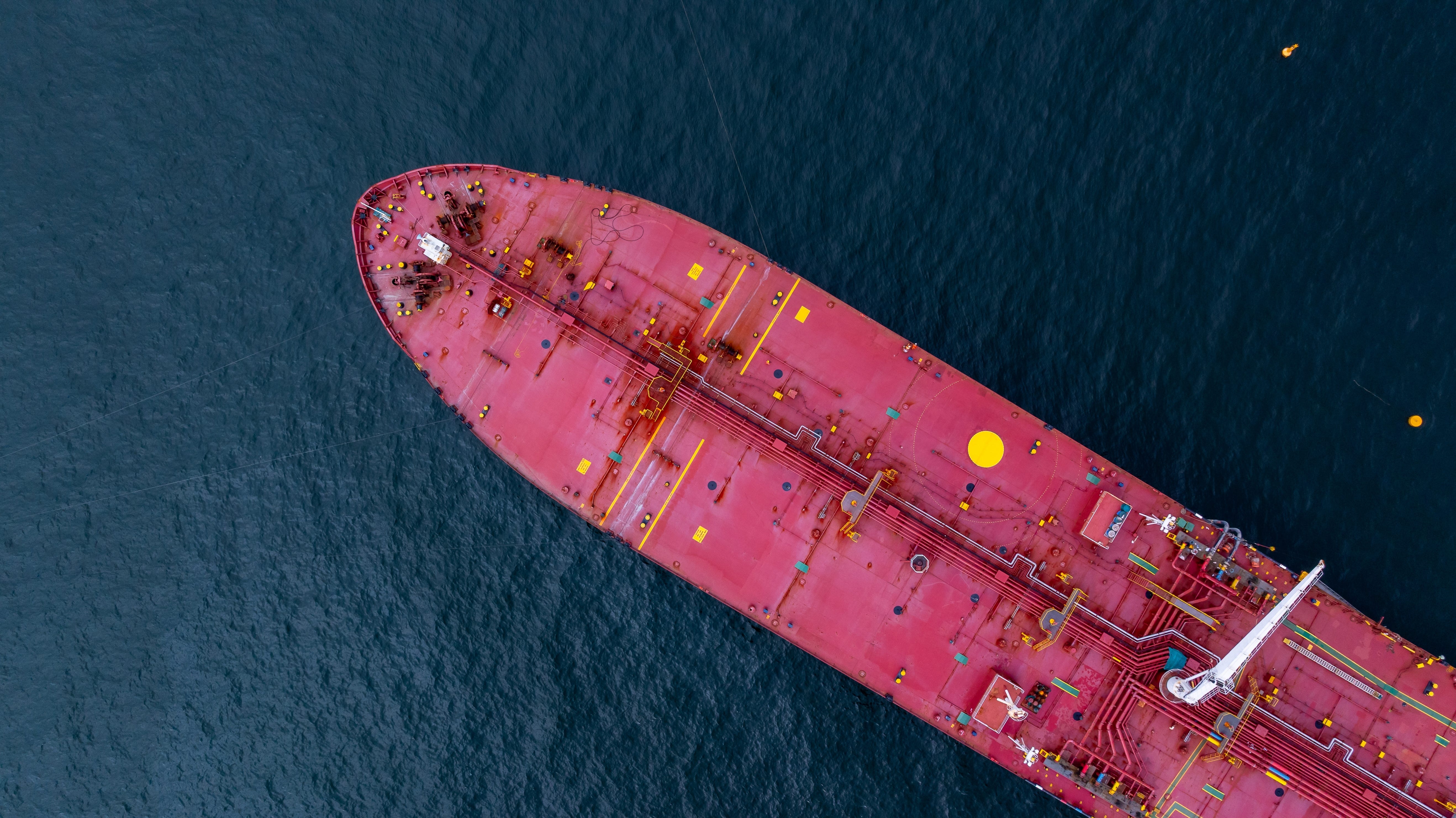
Trump Hits Pause - How Close Are We To A Two-Strait Closure?
And What About Muscat Agreement Rumors…
This Substack is reader-supported. To receive new posts and support my work, consider becoming a free or paid subscriber.
Red Sea Futures synthesizes reporting from a network of 230+ regional experts, primary and open-source intelligence to track the events reshaping one of the the world’s most strategic and volatile maritime corridors – the Red Sea – and its littoral states (+ Ethiopia). This week’s brief draws on annotated feedback from a subset of that network: specialists covering Yemen, the Gulf, the Horn of Africa, and global energy markets, most based in the region. Not all contributing experts are named or directly cited; some sources and analytical inputs are held in confidence. Subscription rates are as follows, and currently through Substack: Standard: $15/month · $150/year for theWeekly Brief. Premium: $85/month · $850/year for the Weekly Brief + Monthly Intelligence Report (30-40 pages). For Institutional inquiries and consults, please email us directly via info@redseafutures.com
IN THIS ISSUE:
Week In Review: the Trump Ultimatum, Bab al-Mandeb Stakes, and The Muscat Agreement
Reading The Houthis: Separating Capacity From Rhetoric
The Saudi-Houthi Back Channel
A Conditional Iranian Statement on Bab al-Mandeb
The Dual Chokepoint, the Horn, Egypt, and the Saudi Position
Key Indicators
About / Subscription Tiers
Contributors
WEEK IN REVIEW
Late Saturday, President Trump issued a 48-hour ultimatum to Iran: open the Strait of Hormuz to commercial shipping or face strikes on Iran’s power plants. Iran responded within hours, stating that all US energy infrastructure in the region would be treated as a legitimate target, and that Hormuz would be closed completely if attacked. The deadline expired Monday. Early Monday AM, March 23, Trump announced that the US and Iran were looking at a “total resolution of our hostilities in the Middle East”, and that the US would stay attacks on Iran power plants for five days. Iran, for its part denies there have been any breakthroughs and calls this an American tactical ploy.
Against that backdrop, this brief focuses on Bab al-Mandeb, the 16-mile passage between Yemen and Djibouti that forms the Red Sea’s southern entrance and the only maritime route to the Suez Canal. The Strait of Hormuz has dominated coverage since February 28; the Red Sea corridor has so far been spared a second simultaneous disruption.
The stakes associated with a Bab al-Mandeb closure, on top of Hormuz, are very high. Saudi Arabia’s Petroline (a 746 mile, 7 million barrel per day bypass pipeline connecting oil fields on the Arab/Persian Gulf to the Red Sea port of Yanbu would lose its economical maritime outlet. Suez Canal volumes, already running 60% below 2023 baselines, would face further suppression (see note on the vulnerability of the Egyptian economy, below). The global shipping industry, which has been absorbing one chokepoint disruption since late February, would face two hits at once, with no comparable alternative routing available. A question is whether Trump’s announcement has anything to do with an assessment of the risk of a two-strait closure.
We interrogate two pieces of intelligence that bear directly on these questions. The first, from Aden (Yemen), describes a recent Saudi special envoy visit to Sanaa with terms that, if accurate, may explain why Houthi maritime operations have remained suspended, and reveal a significant tension between Saudi and US strategy on Iran. The second: an Iranian military source via the Tasnim News Agency (an IRGC-controlled outlet that functions as the Corps’ primary media arm) identifies Bab al-Mandeb as a contingency response option tied to a named trigger: a US strike on Kharg Island.
READING THE HOUTHIS: SEPARATING CAPACITY FROM RHETORIC
Three weeks into an active US-Israel war against Iran, the very scenario Houthi leadership claimed would trigger escalation, the group has not resumed maritime attacks on commercial shipping. The volume of analysis attempting to explain this silence has been considerable. Fatima Abo Alasrar argues that much commentary has simply recycled Houthi rhetoric without interrogating it. Commentary that treats Houthi statements as operational signals rather than as communications designed to maintain relevance ends up amplifying rather than interpreting them.
The corrective starts with the documented record. The 2023–2025 Houthi Red Sea campaign was real, and involved more than 100 attacks on commercial vessels. It also consumed Houthi offensive stocks at a high rate and invited sustained Israeli and US strikes on launch sites, storage facilities, and fuel infrastructure. Operation Rough Rider in 2025 inflicted substantial damage. Israeli strikes killed the Houthi Chief of the General Staff, Muhammad al-Ghamari, who was trained by Hezbollah and the IRGC and critical architect of Houthi missile infrastructure. The critical bottleneck is components: seekers, guidance electronics, and engines. Each must be smuggled from outside through an environment now far more surveilled, while Iran, the primary supplier, is itself under sustained bombardment. Major interdictions in 2025 (including over 750 tons of Iranian-origin materiel at sea and 2,500 tons of drone manufacturing equipment seized last October at Aden) illustrate the scale of that dependency.
The fuel dimension is equally concrete. Iranian oil enters Yemen through IRGC-linked front companies. The UN Panel of Experts estimated the Houthis collected roughly $5.5 billion from this fuel sector between 2022 and 2024. Trump’s April 2025 revocation of the general license allowing petroleum offloading at Houthi ports, combined with Israeli strikes on port fuel infrastructure, has placed that pipeline under considerable pressure. As Abo Alasrar notes, without fuel there are no salaries, no revenue, and no functioning state administration. This is a fiscal constraint with direct implications for operational capacity.
The pattern underneath all of this is one of large claims followed by limited or no action: The Houthis promised a naval blockade they never imposed; they declared ferocious retaliation after Operation Rough Rider and absorbed over a thousand strikes while doing relatively little in response; and when the bombing stopped, they sank two ships and then went quiet. Three weeks ago, Iran was attacked, and since then there have been no outbound missiles.
The more salient question at the moment is less what the Houthis’ intentions may be this minute, but if they have the capacity to pull off their threats. A full resumption of the 2023–2025 campaign is probably beyond their current reach. But another signal strike, e.g., a clear and very limited strike, is relatively easy, and if calibrated right, would even draw limited retaliation. Abo Alasrar’s own framing acknowledges this: the Houthis may still fire “not to enter a war but to exit one with their reputation intact.”
There are other financial dimensions to the current ‘latency period’. With information corroborated by a 2024 UN Panel of Experts letter, The Financial Times and OFAC confirm a Houthi practice of charging safe-passage fees explicitly guaranteeing passage for, notably, Russian and Chinese vessels, while maintaining threats to Western-linked shipping. For a group running on degraded pipelines, selective non-attack is itself a revenue stream, and one that would collapse if indiscriminate attacks resumed.
The autonomy question compounds this. The Houthis are less tightly tethered to Tehran than Hezbollah (Iran co-opted rather than created them, they follow a different branch of Shia Islam, and multiple recent analyses conclude they would survive Iranian regime collapse in a way Hezbollah almost certainly could not). If the current silence reflects a calculation made in Sanaa taking into account degraded arsenals, safe-passage revenues, a Saudi back-channel, and a sober assessment of the Iranian regime’s long-term prospects, then the silence may be the Houthi’s own, not Tehran’s.
THE SAUDI-HOUTHI BACK CHANNEL
Aden-based sources (this week) claim a recent visit by a Saudi special envoy to Sanaa for direct meetings with senior Houthi leadership. We treat this as unconfirmed rumor, not independently verified, and with important context missing. But the structural logic is consistent with what we know about Saudi-Houthi relations. The 2022–2023 truce, brokered with Chinese facilitation through Omani back-channels, acknowledged that Riyadh had concluded a military solution in Yemen was not achievable. The Iran war has intensified that calculus: Saudi Arabia cannot sustain a two-front exposure while Iranian strikes hit its civilian infrastructure and Houthi missiles potentially target Yanbu. The Adenis, who fought the Houthis as part of the Saudi-led coalition since 2015 and whose political sympathies lay with the Southern Transitional Council (the southern separatist movement that dissolved in January 2026 following a Saudi military counter-offensive), have every reason to sound the alarm regarding any prospective deal that might aid the Houthis and further undermine southern claims to self-determination.
“The Muscat Agreement Continues”
An Adeni Arabic language online newspaper this week carries the headline “Riyadh’s Envoy to Sanaa: The Muscat Agreement Continues, and Yemen Is Yours.” This is a reference to Saudi-Houthi de-escalation talks conducted in Muscat under Omani mediation since 2022, that underpinned the April 2022 UN-brokered truce and subsequent negotiations toward a formal settlement. The article asserts the channel is still operative, and that the Saudi envoy offered a commitment that “the North will be yours until conditions stabilize.” When the Houthis allegedly pushed back on that formulation, the envoy’s reported answer was candid: the southerners are still strong, “give us time to bring them to heel” — through a plan to dissolve southern military formations and hand the Yemen file to the Houthis.
The alleged terms are extreme: 80% of southern oil revenues for twenty years, $200 billion in compensation, salary payments to all Houthi personnel. This would be read as an opening position, what matters analytically is the direction: Riyadh may be prepared to offer the Houthis a great deal to keep the Red Sea quiet. The explicit maritime ask, as described, is that the Houthis “stay as they are and not escalate, especially in the Red Sea.”
If accurate this contacts adds a fourth explanatory layer to the Houthi silence. Washington may not be as opposed to a Saudi back-channel as the maximum-pressure framing implies. A Saudi-brokered arrangement that reduces Houthi dependence on Tehran and keeps the Red Sea quiet in the process might be seen to align with broader US regional interests, even if pursued through Riyadh rather than Washington. And China, which midwifed the last major Saudi-Houthi accommodation, is watching from Djibouti.
A STAY OF ACTION
Trump’s power-plant ultimatum, issued Saturday, expired today (Monday, March 23). This morning, President Trump announced that the US and Iran were exploring a “total resolution” of hostilities, and placed a five-day hold on strikes against Iran’s power plants. Iran denied any breakthrough, characterizing the announcement as an American tactical ploy. Whether Trump’s pause reflects a genuine back-channel or is itself a form of pressure management remains unclear, but the timing raises an interesting question: does the hold have anything to do with an assessment of the administration’s assessment of two-strait closure risk?
Tasnim News Agency, an IRGC-controlled outlet that functions as the corps’ primary media arm this week quoted an anonymous Iranian military source stating that any US strike on Kharg Island would be met with an “unprecedented response,” and that among the options available to the axis of resistance is “expanding instability to include other waterways, such as the Bab al-Mandeb Strait and the Red Sea.” The source described the simultaneous US easing of Iranian oil restrictions and the threat to Kharg as contradictory, and warned that an attack on Kharg could produce “major repercussions for both the United States and regional security.” Separately, IRGC naval commander Admiral Alireza Tangsiri posted to X a claim that Iranian forces had struck facilities at the Al Minhad base in the UAE and the Ali Al Salem base in Kuwait, targeting aircraft hangars and fuel depots used by US and Israeli warplanes. These claims have not been independently verified.
The conditional framing, i.e., Bab al-Mandeb as a response to Kharg Island strikes specifically, is analytically more precise than the generalized Red Sea threat language appearing in secondary coverage, and the trigger it identifies is directly relevant to Monday’s deadline. Power plant strikes, if executed, would almost certainly encompass Kharg Island. Clients should note this contingency in their planning.
Separately, Abo Alasrar’s analysis is a useful corrective on the Houthi side: the question is not whether the Houthis can sustain an extended maritime campaign (current evidence suggests they cannot) but whether their remaining capacity is sufficient for a limited signal action. A single maritime strike would require less than a sustained campaign, and would serve a different purpose: maintaining credibility rather than prosecuting a strategy.
Our experts do not agree on whether the Houthis retain sufficient operational readiness for even a limited action, or whether the current quiet reflects a more fundamental depletion. That question is unlikely to be resolved before events clarify it.
KEY INDICATORS
The Strait of Hormuz, effectively closed since March 2, normally carries 20% of global oil. Since February 28, only 21 tankers transited in the first three weeks versus 100+ daily under normal conditions. P&I clubs cancelled coverage from March 5. Brent crude has not dropped below $100 since March 13 and peaked at $120 on March 9.
The Bab al-Mandeb, 16 miles wide at its narrowest, routes roughly 10% of global seaborne oil toward Suez. Suez Canal volumes are already running 60% below 2023 baselines. A resumption of Houthi maritime operations would not add a marginal threat to an existing crisis, it would convert a containable disruption into a systemic one.
Goldman Sachs has assessed that a credible Houthi threat to Bab al-Mandeb could push oil prices toward $120. Saudi Arabia’s Petroline rerouting toward Yanbu (currently handling 27 VLCCs where two is normally the berth-capacity peak) provides a partial buffer. But if Bab al-Mandeb closes, Riyadh loses its final maritime export route.
The Arab Gulf states (Saudi Arabia, Qatar, the UAE, Kuwait, Bahrain) were not informed of the original US-Israel strike on February 28, did not support it, and are now absorbing Iranian retaliation against their own civilian infrastructure, Iran’s response however, changed the calculation drastically. The Saudi Foreign Minister’s declaration that trust with Iran is “completely shattered” removes the diplomatic channel through which Riyadh had exercised moderate influence over Houthi decision-making. It’s also a hint, as Ethan Chorin notes in his recent Substack, that the Arab Gulf cannot brook the possibility of an intact, openly hostile state on their opposing shore. That would likely be worse, at least in the short run, than a failed state, trying to re-coalesce.
THE HORN: ERITREA-ETHIOPIA AND THE WESTERN SHORE
While the Gulf absorbs the headlines, the western shore of the Red Sea is developing its own pressures. Eritrea’s March 18 statement accused Ethiopia’s ruling party of “a reckless and insidious agenda of belligerence and destabilization,” citing PM Abiy Ahmed’s invocation of Israel’s Golan Heights annexation as a model for Ethiopian sea access. Abiy’s stated ambition is explicit: direct access to the Red Sea.
Egypt has responded by signing agreements to develop Assab including warship berths, positioning Cairo as Asmara’s strategic patron. The Horn Review documents a shadow alliance between Iran, Sudan’s RSF, and Eritrea, with Assab and Massawa identified as potential staging nodes for Iranian drone transfers.
Viewed from a maritime security perspective, this creates a two-shore pressure on Bab al-Mandeb. The chokepoint’s Yemeni side is managed imperfectly through the Oman-brokered ceasefire architecture. Its African side (Djibouti, Eritrea, the Horn) is fragmenting.
EGYPT: A CANARY IN THE RED SEA COAL MINE
Suez Canal revenue ran 18.5% above baseline year-to-date through early February — before the Iran war hit transit volumes. Single-day throughput dropped to 23 vessels on March 4. The Egyptian pound has weakened 10% in a single month.
Robert Springborg, a leading expert on Egypt’s politcal economy identifies dimensions of Egypt’s exposure that the standard canal-remittance-Gulf aid framework misses. Tourism revenues are in freefall, self-evident given the security situation but rarely quantified in current reporting. More consequentially, Egypt has become a net importer of both natural gas and transport fuels, making it acutely exposed to the LNG crunch now threatening QatarEnergy’s long-term contracts. “The danger of electricity cuts will become substantial in the coming hotter months,” he writes, “unless LNG cargoes can be purchased, which will be increasingly difficult as competition for them will grow.”
“The political spillover of higher inflation coupled with blackouts is clearly worrying the regime, hence the extension of payments to the poor through World Bank backed programs.” The expansion of Takaful and Karama social transfers is not generosity — it is a political barometer signalling that Cairo is pricing in a prolonged disruption.
THE SAUDI CALCULUS
Saudi Arabia occupies the most exposed position of any state that has not formally entered the conflict. The Petroline rerouting to Yanbu is working, for now. NEOM’s luxury tourism components, already facing delays and restructuring before the conflict, are now exposed to the full force of regional security risk, an additional liability for a program the kingdom was already scaling back. The Line’s $1 billion tunnel contract was cancelled in March. The kingdom’s fiscal breakeven on oil requires $90+ per barrel; Brent at $112–$114 provides a cushion, but only as long as Saudi export infrastructure remains intact.
Should Trump strike Iranian power infrastructure and Iran activate the Houthi Bab al-Mandeb option, Yanbu becomes the last remaining Saudi maritime export artery. That is not a position any petrostate wants to occupy.
ABOUT THIS BRIEF AND THE FULL PRODUCT
What you have just read is the Red Sea Futures Weekly Brief: a synthesis of open-source reporting, expert annotation, and AI-assisted analysis, condensed to the most decision-relevant intelligence from the week’s events. It is produced for practitioners who need reliable regional analysis without the overhead of managing a research team.
The Weekly Brief is the summary layer of a larger product. The Red Sea Futures Monthly Intelligence Report is the full model run: a 40–60 page document that combines our AI synthesis across six languages with direct expert annotation from a rotating subset of our 230+ regional network. It includes the complete indicators dashboard, country-by-country economic vulnerability baselines, sourced directed questions put to named experts with their responses, and the full signals detection log underlying each week’s top events. It is the product law firms, PE firms, and policy offices use when they need to brief a partner, structure an argument, or assess exposure, not just stay informed.
The Monthly Report is available to Premium subscribers. It is delivered once per month, with additional issues published in response to significant breaking developments such as the current Iran-US conflict.
Subscription tiers:
Free: Occasional public posts and event-driven dispatches.
Standard ($15/month · $150/year): The Weekly Brief, every week. What you are reading now.
Premium ($85/month · $850/year): The Weekly Brief plus the Monthly Intelligence Report, delivered as a full PDF to Premium subscribers each month. Includes sourcing logs, expert annotation, and the complete indicators dashboard.
Red Sea Futures also works directly with law firms, PE firms, and government agencies on bespoke engagements: expert identification, case support, scenario planning, and rapid assessments. Fixed-rate engagements, typically delivered within 48–72 hours.
To upgrade your subscription, use the button below. For institutional inquiries, contact us at info@redseafutures.com or visit redseafutures.com/legal.
CONTRIBUTORS TO THIS ISSUE
Fatima Abo Alasrar: Ideology, Conflict, and Great-Power Competition. Founder of The Ideology Machine, a publication on authoritarian information systems. Her work examines the intersection of ideology, conflict, and great-power competition, with particular attention to how Iranian-aligned movements interact with broader geopolitical currents across the Middle East. Previously, Alasrar was a senior analyst at the Arabia Foundation in Washington, DC, MENA Director at Cure Violence, and a research associate at the Arab Gulf States Institute in Washington. Speaks Arabic and French.
Michael Brill: Gulf and Iraq Specialist. PhD candidate in Near Eastern Studies, Princeton University; MA in Arab Studies, Georgetown University. Alumnus of the Critical Language Scholarship and Center for Arabic Study Abroad fellowship programs. Global Fellow, Woodrow Wilson International Center for Scholars’ History and Public Policy Program (2024–2025); Non-Resident Fellow, US Air Force Academy’s Institute for Future Conflict. Currently Visiting Scholar in Middle East Studies at Smith College and Visiting Lecturer in Political Science at Westfield State University. Research focuses on Iraq under Baʿth Party rule (1968–2003). Published in the International Journal of Middle East Studies, Middle East Journal, Foreign Affairs, War on the Rocks, and the Woodrow Wilson Center.
Dr. Ethan Chorin: Executive Chairman & CEO, Red Sea Futures. Former US diplomat with more than 25 years working on Red Sea issues; senior fellow at SOAS, CSIS, and the Dubai School of Government, and Author of four books on the region including Benghazi: A New History (Hachette) and Exit the Colonel, with a forthcoming modern history of the Red Sea (Harvard University Press). Two-time Fulbright Fellow, recent Yale Lecturer. PhD, UC Berkeley. Published in Foreign Affairs, the FT, FP, the NYT, and others. Arabic, French, and Farsi.
Captain Roy Facey: Maritime Operations Specialist, Red Sea Shipping. Over 40 years as lead advisor on port master plans, feasibility studies, concession tender documents, accident investigations, and dredging assessments throughout the Red Sea and Gulf region. Master Mariner. Expertise covers commercial port operations, shipping route planning, supply chain risk, and tariff optimization. MSc in Offshore Technology and Marine Structures; BS in Engineering Maritime Studies. French, Spanish, and Arabic.
Nasser bin Nasser: Jordan, Gulf, and WMD/CBRN Risk Specialist. Founder of InfoSynth, a strategic consultancy, and Managing Director of the Middle East Scientific Institute for Security (MESIS), a non-profit addressing chemical, biological, radiological, and nuclear risks across the region. Former senior analyst in the Foreign Affairs Directorate of the Office of His Majesty King Abdullah II of Jordan. World Economic Forum Young Global Leader (2015). Columnist, Jordan News Daily. His areas of expertise include non-proliferation, CBRN risks, non-state actors, security governance, and Middle East geopolitics. MA in Near Eastern Studies, Princeton University; BA in Environmental Science, Policy, and Business Management, Clark University. Arabic and English.
Prof. Robert Springborg: Political Economy of Egypt and MENA. Research Fellow at the Italian Institute of International Affairs and Adjunct Professor at Simon Fraser University. Has held senior academic positions including the MBI Al Jaber Chair in Middle East Studies at SOAS and Director of the American Research Center in Egypt, as well as professorships at the Naval Postgraduate School and Macquarie University in Sydney. Has consulted on Middle East governance for USAID, the US State Department, UNDP, and various UK government departments. Serves on the Rowaq Arabi Editorial Board. Author of Egypt (2018) and Political Economies of the Middle East and North Africa (2020); Editor-in-Chief of the Routledge Handbook of Contemporary Egypt (2021); co-editor of The Political Economy of Education in the Arab World (2021), The Egyptian Revolution of 1919 (2023), and Security Assistance in the Middle East (2023).
If you are a practitioner, investor, legal counsel, or policy professional operating in the Red Sea corridor or with exposure to its disruptions, we would love to hear from you. For inquiries about existing and tailored information products and consulting, please contact us on info@redseafutures.com
RED SEA FUTURES | Intelligence for A Volatile Passage
© 2026 Red Sea Futures / Perim Narrative Arts LLC. Not for redistribution without permission. Info@redseafutures.com
Get the next issue by email.
Read/Subscribe on Substack →